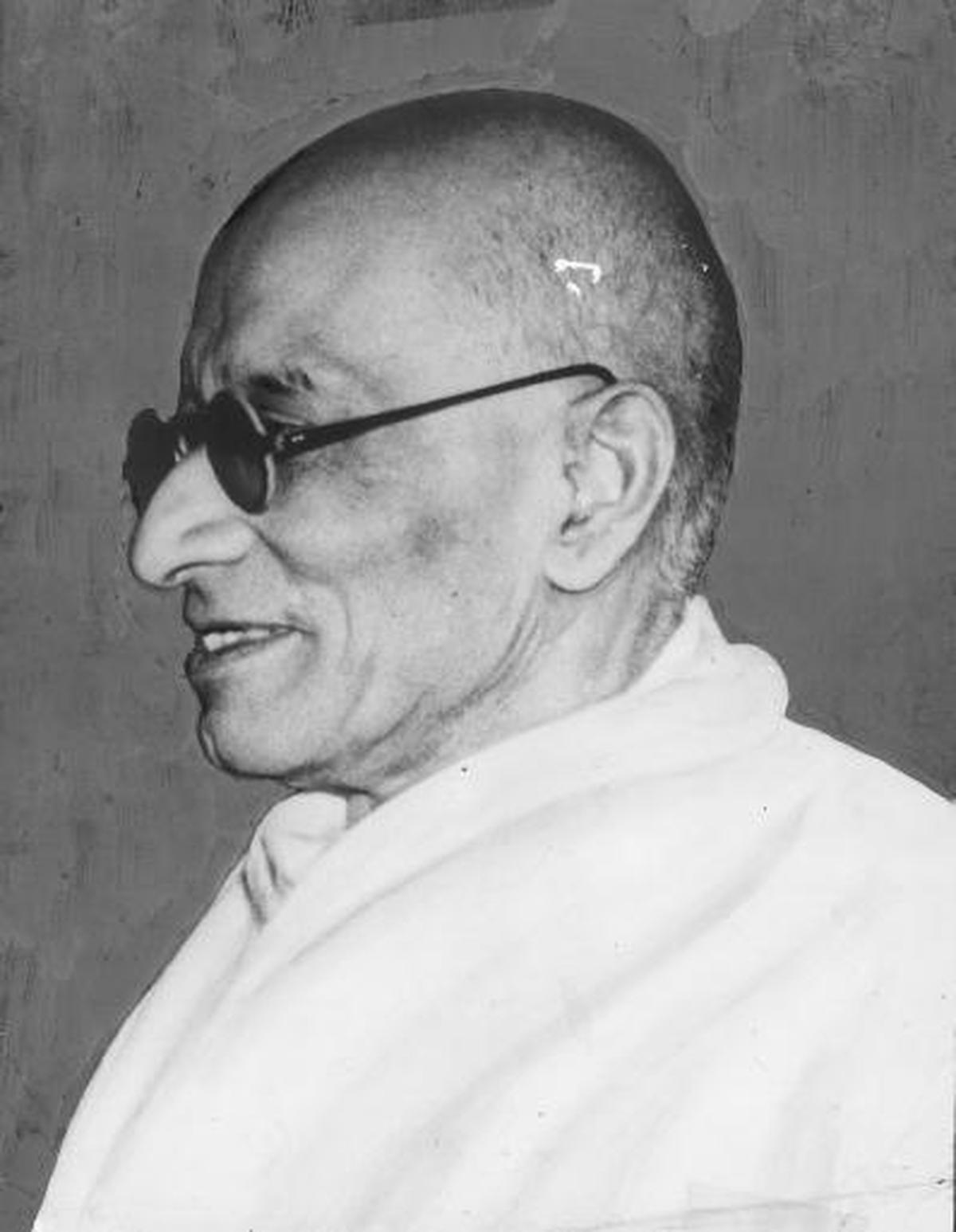
Chakravarti Rajagopalachari
Rajaji
Politician · Thinker · Writer · Statesman
Eleven chapters, one long argument
What if political courage meant disagreement?
Most of the men and women remembered from India’s freedom movement are remembered for what they joined. Rajagopalachari is remembered at least as much for what he refused to join.
In 1942 he argued against the Quit India resolution while almost the whole Congress leadership moved towards it, resigned his membership, and spent the following two years advancing a settlement with the Muslim League that his own party had rejected. In 1959, at the age of eighty, he left the party he had helped govern India with and founded an opposition to it. In 1965 he supported Tamil protests against the compulsory spread of Hindi — the very policy his own government in Madras had pressed in 1937.
None of this makes him automatically right. Several of his positions were defeated at the time and remain contested by historians now; some, such as his 1953 education scheme, were withdrawn under sustained public opposition. What the record does show is a politician unusually willing to be in a minority of one, and to write down his reasons while he was there.
This website is built around those reasons. It follows Rajaji through the offices he held and the arguments he lost and won, and it puts the counter-arguments beside his own.
How to read this sitePositions described as Rajaji’s are drawn from his recorded actions, speeches and published writing. Where historians disagree about motive or consequence, the disagreement is stated rather than resolved.
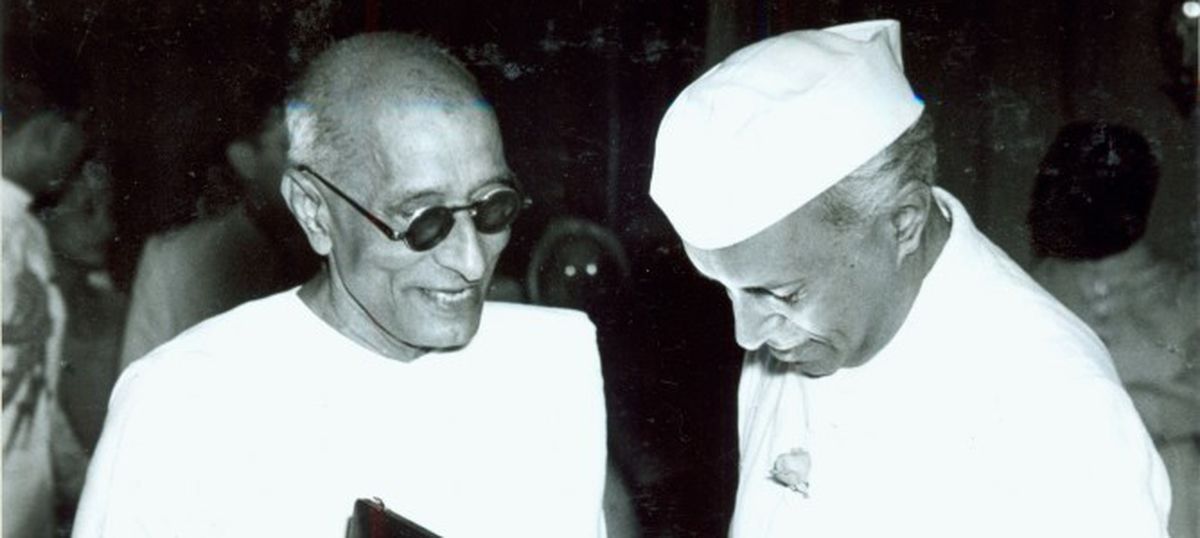
Four commitments run through six decades of his public life. He wanted the British out, but he did not think independence alone would produce liberty. He wanted a strong government, but a small one. He believed a citizen owed duties before claiming rights, and that a state which could give a man his livelihood could also take it away.
Held together, these commitments explain why he could be a Gandhian in 1930 and the founder of a free-market opposition in 1959 without changing his mind about very much.
Interpretation, not quotationThis equation is an editorial framework written for this website to summarise recurring themes in Rajaji’s public positions. It is not a statement he made, and it is not a quotation.
Born at Thorapalli
Born on 10 December 1878 in the village of Thorapalli, in the Salem district of the Madras Presidency, to a family of modest means. He grew up in Hosur, where his father held a local judicial post.
Enrolled as a lawyer
After Central College, Bangalore, and Presidency College, Madras, he enrolled as a lawyer in 1900 and began practising at Salem. Legal work supported him for the next two decades and shaped the way he argued for the rest of his life.
Into the national movement
The Rowlatt Act — which extended emergency detention powers into peacetime — provoked nationwide protest. Rajagopalachari joined Gandhi’s campaign against it, and within a short time gave up his legal practice for full-time political work.
The Vedaranyam salt march
While Gandhi marched to Dandi in Gujarat, Rajaji led the parallel Tamil march from Tiruchirappalli to the coastal village of Vedaranyam, where volunteers made salt in deliberate breach of the salt laws. He was arrested and imprisoned.
Premier of Madras
After the first elections under the Government of India Act 1935, Congress took office in Madras and Rajaji became Premier in July 1937. His ministry introduced prohibition, pressed a temple-entry law for Dalits, and provoked a long agitation by making Hindi compulsory in secondary schools.
The C. R. Formula
Having opposed the Quit India resolution and left the Congress, he published a proposal for breaking the constitutional deadlock: a post-war plebiscite in the Muslim-majority districts of the north-west and north-east, in return for the League joining an interim national government. Jinnah rejected it; so did much of the Congress and the Hindu Mahasabha.
Governor of West Bengal
He was sworn in as Governor of West Bengal on 15 August 1947, taking charge of a province divided by partition and unsettled by communal violence. He held the office until June 1948.
Governor-General of India
On 21 June 1948 he succeeded Lord Mountbatten as Governor-General — the first Indian in the post. He held it until the constitution came into force on 26 January 1950, when the office ended and Rajendra Prasad became President.
Chief Minister of Madras State
He returned to provincial government in April 1952 in contested circumstances, after an election that had left no party with a clear majority. He resigned in April 1954 and was succeeded by K. Kamaraj.
Bharat Ratna
He was among the first three recipients of the Bharat Ratna, India’s highest civilian honour, instituted in 1954 — alongside the physicist C. V. Raman and the philosopher S. Radhakrishnan.
The Swatantra Party
At eighty, he founded a national opposition party committed to limiting state control of the economy. Announced in Madras in June 1959, it was formally constituted at a convention in Bombay that August.
Death in Madras
He died on 25 December 1972 in Madras at the age of ninety-four, still writing. His last decades of journalism, and the party he built, outlived him as arguments rather than as institutions.
Should history remember Rajaji as a politician or as a thinker?
He held high office for barely ten of his ninety-four years. He wrote for more than fifty. The offices made him consequential; the writing made him unusual. The two are not easy to separate — and the eleven chapters that follow do not try to.