Governing a province
Twice he governed the province he came from: as Premier of the Madras Presidency from 1937, and as Chief Minister of Madras State from 1952. Both ministries ended early, and both left arguments that outlasted them.
Office
Premier of the Madras Presidency, July 1937 to October 1939, after the first elections held under the Government of India Act 1935.
Return
Chief Minister of Madras State, April 1952 to April 1954, in contested circumstances after an inconclusive general election.
Method
Decide quickly, publish the reasoning, and accept the consequences. He rarely softened a policy to make it popular.
Cost
Neither ministry ran its full course. One ended on a matter of constitutional principle; the other on the strength of public opposition.
The first Congress ministry in Madras
The Congress won the Madras elections of 1937 and Rajagopalachari was sworn in as Premier that July. It was the first time an Indian party with a mass following had held executive power in the province, and it was watched accordingly — by the British administration, by the Justice Party it had displaced, and by the Congress leadership in the north.
His ministry moved fast. It introduced prohibition, beginning in his own district; it legislated for the entry of Dalits into temples; it put through a general sales tax to fund the loss of liquor revenue; and it ordered Hindi to be taught in secondary schools, which set off a language agitation that has never entirely ended.
In September 1939 the Viceroy declared that India was at war with Germany without consulting a single Indian legislature. The Congress ministries resigned in protest, Rajaji’s among them, in October 1939. The province returned to rule by its governor.
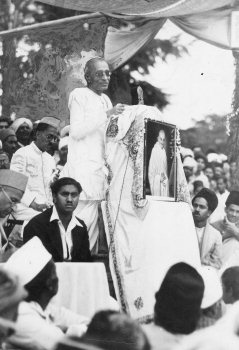
Six decisions, and what they cost
Each panel below sets out a question his government had to answer, what it did, why, how people responded, and what is still argued about. Open any panel to read it.
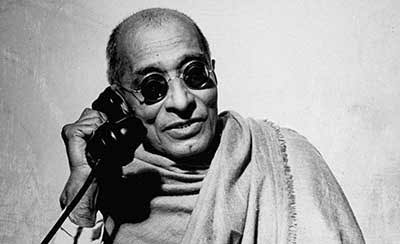
The contested return
The first general election of independent India left no party with a clear majority in Madras State. Rajaji was not a member of either house at the time. The Governor nominated him to the Legislative Council and invited him to form a government, and he took office in April 1952.
Opponents called the appointment a manoeuvre that set aside the verdict of the electorate; his defenders argued it was a lawful use of the Governor’s discretion in a hung house. The controversy shadowed the ministry from its first day.
It governed for two years through food shortages and a difficult finance position, and fell over the education scheme described above. Rajaji resigned in April 1954. He never held executive office again — and did his most influential political work in the eighteen years that followed.